
Become a supporter
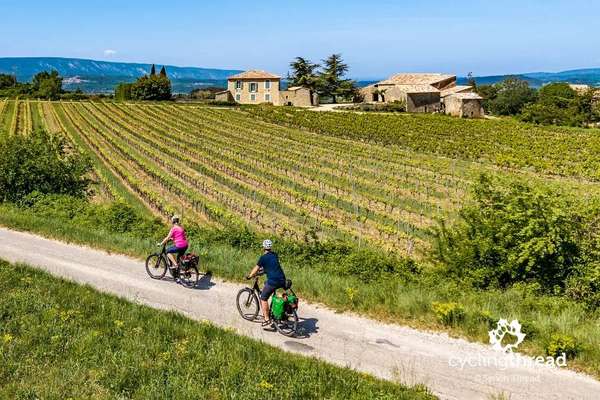
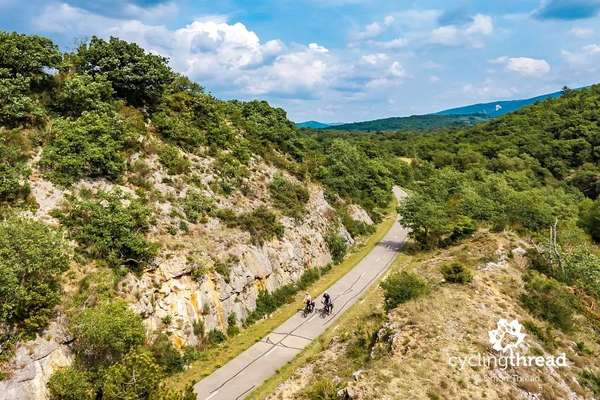
The cycle route around Luberon in Provence offers one of the most rewarding ways to discover this partof France. Stretching through vineyards, orchards and rolling limestone hills, it links a remarkable collection of historic villages and small towns. Quiet local roads, frequent viewpoints and a relaxed pace of life make the journey particularly attractive for cycle travellers. Despite regular climbs, the route remains accessible and reveals a side of Provence that is often missed by visitors travelling by car. Over several days, cyclists can experience both the natural beauty and cultural heritage that define the region.
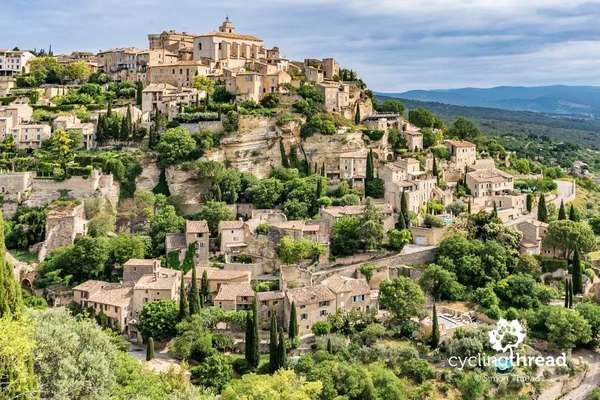
Few places capture the character of Luberon better than Gordes. Perched dramatically on a hillside, the village seems to emerge directly from the surrounding rock, creating one of the most iconic landscapes in Provence. Narrow streets, stone houses and historic landmarks reflect centuries of local history. Even with its popularity among visitors, Gordes retains much of the atmosphere that has made it one of the most admired villages in France. The panoramic views from the village are among the highlights of any journey through Luberon.
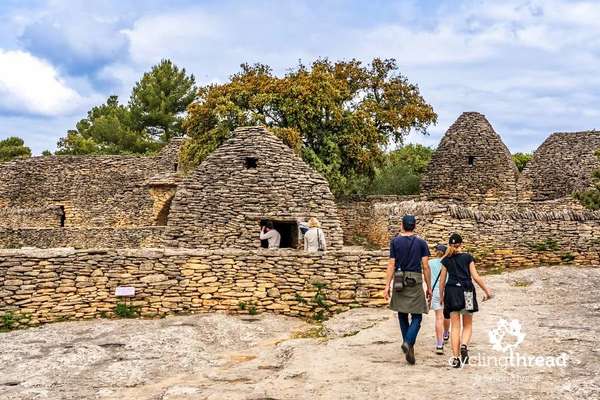
Just outside Gordes lies the Village des Bories, one of the region's most unusual historical attractions. The settlement consists of traditional dry-stone huts built entirely without mortar, using limestone collected from nearby fields. These structures illustrate how local communities adapted to the demanding landscape and made practical use of available materials. Today, the site offers a rare opportunity to explore an important part of Provence's rural heritage. Walking between the stone buildings provides a fascinating glimpse into everyday life in earlier centuries.
The route follows long sections of the Véloroute du Calavon, one of the best-known cycling paths in Provence and part of EuroVelo 8 - the Mediterranean Route. Built largely on a former railway line, it provides a comfortable and largely traffic-free connection between towns and villages across the valley. Gentle gradients, attractive scenery and dedicated cycling infrastructure make it suitable for a wide range of cyclists. As a section of the European route linking Spain with Cyprus, it also highlights the growing importance of Provence as a destination for cycle tourism. Many travellers use this route as an easy way to explore the heart of the Luberon region.
Evidence of the region's long history can be found at Pont Julien, a Roman bridge built more than two thousand years ago on the ancient Via Domitia. Constructed from local stone, it continues to span the Calavon valley and remains open to cyclists and pedestrians. Its elegant arches and remarkable state of preservation make it one of the most impressive historical monuments along the route. Passing over the bridge offers a direct connection with the travellers who crossed this landscape in Roman times. Few cycling routes in Europe allow riders to encounter such well-preserved Roman infrastructure so closely.
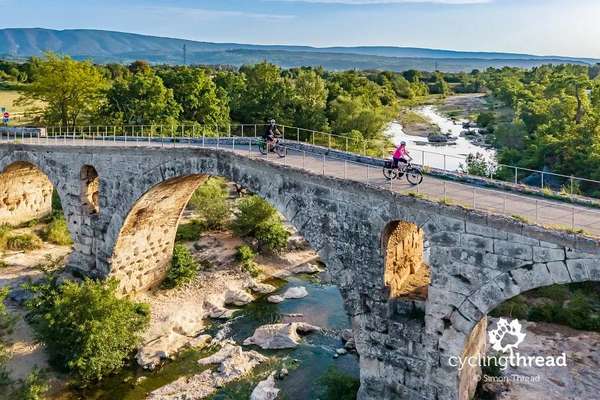
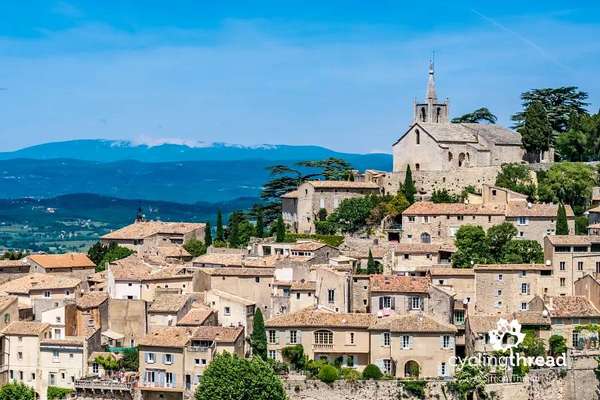
Further along the route, Bonnieux rises above the surrounding countryside and rewards visitors with wide views across the Luberon hills. Steep lanes lead towards the old church at the highest point of the village, while lower streets are lined with traditional stone buildings and shaded squares. The village was once part of the Papal States, adding another chapter to the rich history of the region. Today, historical heritage and everyday village life exist side by side. Its elevated position makes Bonnieux one of the most scenic stops along the route.
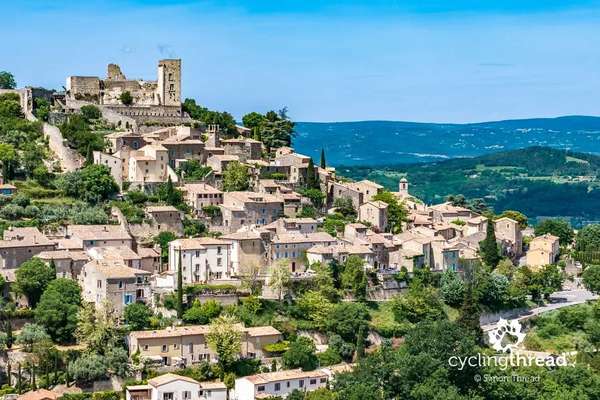
A different atmosphere awaits in nearby Lacoste. Dominated by the former castle of the Marquis de Sade, the village combines medieval architecture with a strong contemporary cultural presence. Public spaces display modern artworks, while educational and artistic institutions have brought new life to the historic streets. The result is a place where centuries-old buildings and modern creativity coexist in an unusual but successful balance. This blend of history, culture and architecture gives Lacoste a distinctive identity within the region.
Together, these places show why cycling feels like such a natural way to experience Provence. Travelling by bike allows time to appreciate the details of village life, historical monuments and changing landscapes between destinations. Quiet roads and a well-connected network of local routes make exploration both comfortable and enjoyable. In our opinion, one of the greatest strengths of Luberon is the balance between famous attractions and the peaceful countryside that surrounds them. Whether on traditional bicycles or e-bikes, we found a region where culture, scenery and everyday Provençal life blend together in a way that is difficult to experience from behind a car window.
Check out more from Luberon at www.cyclingthread.com :-)
And don't miss our other posts on cycle.travel:
- Waterline Route in the Netherlands
- Elbe Cycle Route in Germany
- Ciclovia Alpe-Adria - Austria & Italy
- Loire by bike in France
- Rhine Cycle Route in Switzerland
- Tauber-Altmühl Radweg in Franconia
The Waterline Route, known as the LF Waterlinieroute, is one of the most original long-distance cycle routes in the Netherlands. The route follows the old Dutch water defence lines that protected the country for centuries. It combines history, water management and the Netherlands’ famous cycling culture in one journey. Instead of mountains or dramatic climbs, the route offers canals, flood protection dikes, forts, locks and peaceful polder landscapes. The atmosphere is calm and relaxing, with a strong connection to Dutch history visible almost everywhere along the way.
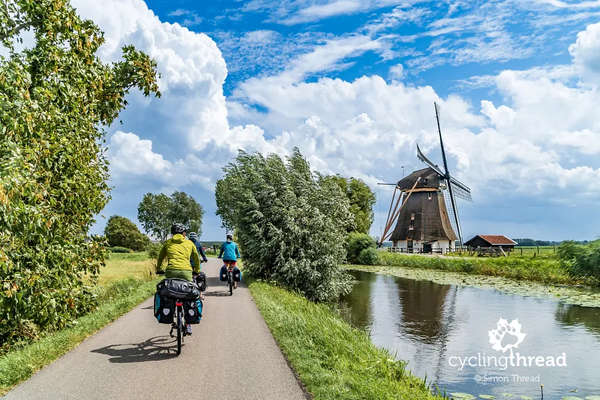
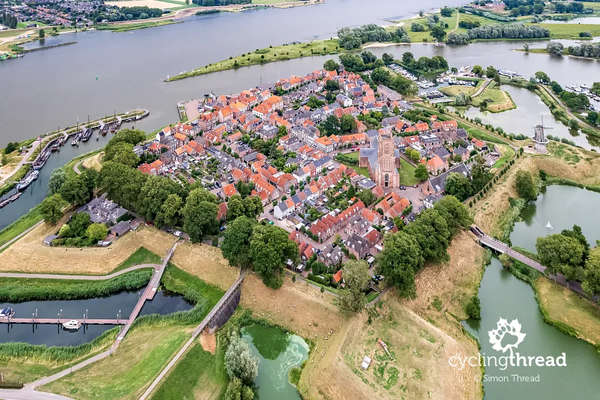
Officially, the Waterline Route runs from Edam to Bergen op Zoom and is around 410 kilometres long. It starts in the northern part of the country, among landscapes reclaimed from the sea, and then curves around Amsterdam towards the south. Along the way the route passes places such as Haarlem, Muiden, Naarden, Utrecht, Gorinchem and the wetlands near De Biesbosch National Park. The scenery changes regularly - one day the route leads through historic fortified towns, and the next through quiet wetlands and canal landscapes. Ferries crossing rivers and canals are also an important part of the experience and are well adapted for cyclists.
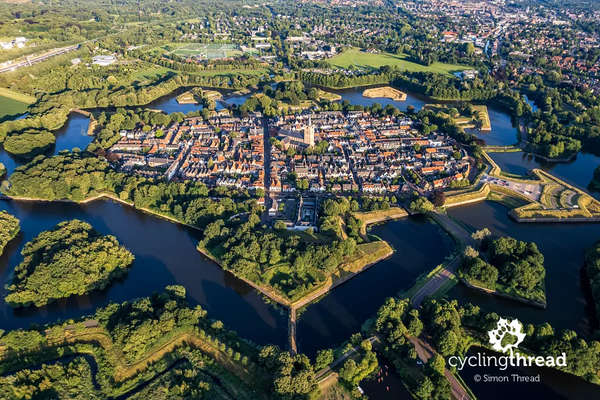
The main theme of the entire route is the Dutch water defence system, today recognised as a UNESCO World Heritage Site. The Waterline Route follows both the Defence Line of Amsterdam and the New Dutch Waterline. In the past, the Dutch could intentionally flood huge areas between the forts to stop enemy armies. The water was carefully controlled so it became too deep for soldiers to walk through but too shallow for boats to pass. Canals, locks, pumping stations and dikes played a key role in managing the water levels. Today these former military structures are part of the landscape and often house museums, restaurants or accommodation facilities.
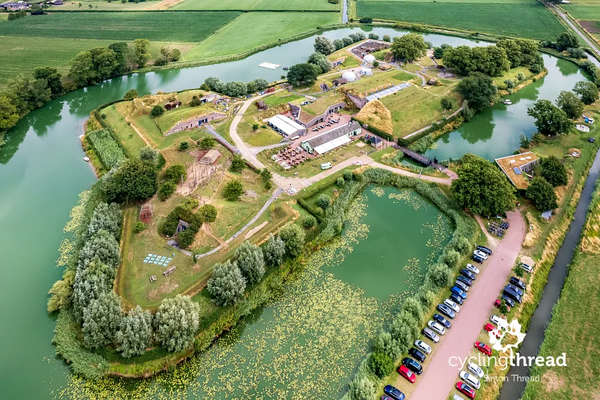
Many forts and military structures can still be seen along the route, especially around Amsterdam and Utrecht. One of the most interesting is Fort bij Nigtevecht, built at the end of the nineteenth century beside the Amsterdam-Rhine Canal. Nearby stands Fort aan de Drecht, surrounded by typical Dutch landscapes of canals and green polders. Another highlight is Naarden, one of the best-preserved fortified towns in the Netherlands, famous for its star-shaped defensive layout. Gorinchem also leaves a strong impression with its old defensive walls and historic riverside atmosphere. Many of these former military sites are now naturally integrated into everyday Dutch life.
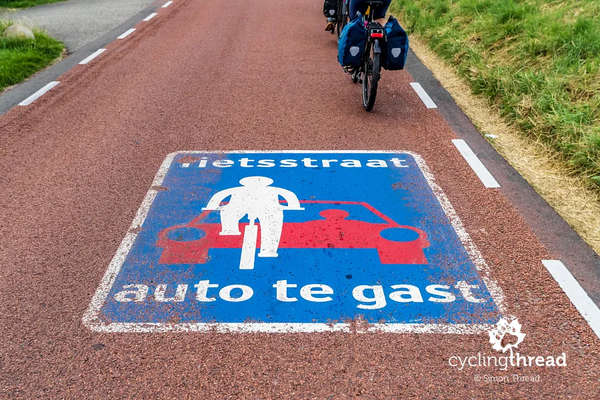
One of the biggest advantages of the Waterline Route is the quality of Dutch cycling infrastructure. The route mainly follows smooth asphalt cycle paths and quiet local roads running beside canals and flood protection dikes. Cyclists often ride on fietsstraat roads, where bicycles have priority and cars are treated as guests. Another typical Dutch solution is the “2 minus 1” road, where cars share a narrow carriageway with cyclists. Gravel sections are very rare and usually limited to short stretches in protected natural areas. Combined with the calm behaviour of Dutch drivers, this creates a very safe and comfortable environment for long-distance cycling.
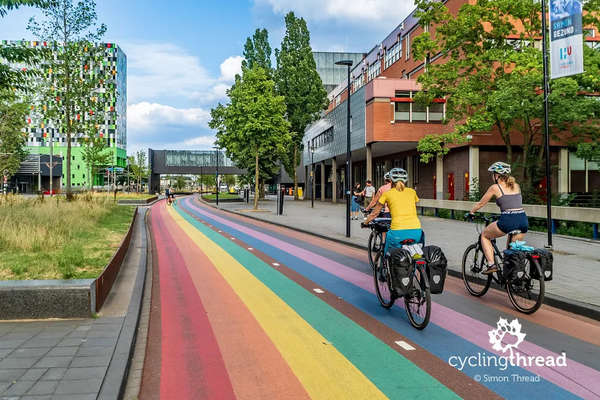
One of the most memorable parts of the journey is the ride through Utrecht, often considered one of the most bicycle-friendly cities in the world. This is where the famous colourful bicycle path can be found, frequently photographed as a symbol of modern Dutch cycling infrastructure. Utrecht combines a historic city centre with a highly modern approach to mobility and public space. The Waterline Route shows an interesting contrast between old military history and today’s cycling culture. Windmills are another important symbol of the Dutch landscape visible along the route. Near Amsterdam, cyclists can also spot the photogenic Mondriaan windmill, one of the most beautiful views of the entire trip.
The final part of the route leads through the area of De Biesbosch National Park, one of the most unique natural landscapes in the Netherlands. This large wetland area is filled with rivers, canals, islands and floodplains that clearly show the country’s deep connection with water. De Biesbosch is one of the largest freshwater tidal wetlands in Europe and an important habitat for birds and beavers. Here the atmosphere becomes even quieter and more natural than around Amsterdam or Utrecht. It also presents the diversity of Dutch nature and landscapes in a very accessible way.
Find more river cycle routes on our website.
Don't miss my other posts on cycle.travel:
- Around Luberon cycle route in Provence
- Elbe Cycle Route in Germany
- Ciclovia Alpe-Adria - Austria & Italy
- Loire by bike in France
- Rhine Cycle Route in Switzerland
- Tauber-Altmühl Radweg in Franconia
The Elbe Cycle Route - Elberadweg - is one of Europe's most famous river rides - and it really deserves that title. It's easy to follow, mostly flat and full of interesting places to see. But what stood out most to us between Dresden and Magdeburg was how often the atmosphere changed. One moment we were riding past elegant buildings, the next through open fields, forests or quiet villages. The river is always nearby, but it doesn't try to steal the show - it just gently leads the way. This part of the route felt like a perfect example of how well Germany does cycling: it's varied, welcoming and thoughtfully planned. Whether you've done long tours before or this is your first time, following a river like the Elbe is a great way to enjoy the journey - especially one that never feels the same for long.
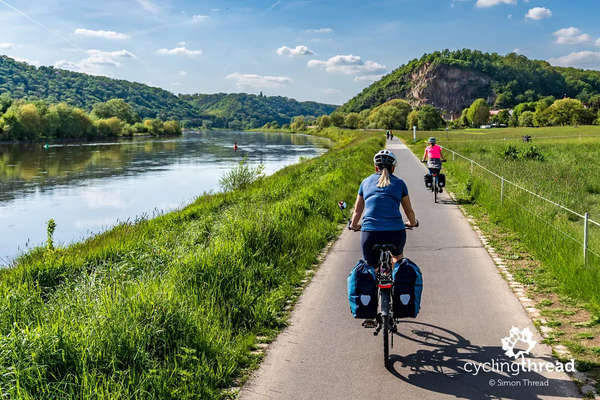
Dresden is a beautiful place to start a cycling trip. The route runs right through the city, along the river and then out into greener spaces. Sometimes you're close to the water, sometimes a bit further away, but the river is always there. It's hard to ride fast around Dresden - there's too much to see. Not far from the city you'll find Radebeul, where fans of adventure stories can visit the Karl May Museum. Just a short ride away is Altkötzschenbroda, a peaceful, creative old village. And nearby, Wackerbarth Palace welcomes visitors with vineyards and a working winery. Dresden isn't just a starting point - it's a place worth staying an extra day to explore.
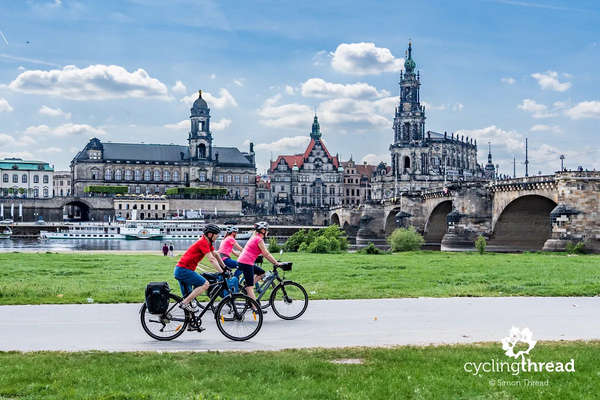
Between Dresden and Magdeburg, the route is full of variety. You'll ride on smooth asphalt most of the time, but there are also short stretches of cobblestones, gravel or older concrete. Sometimes you cycle along raised dikes, sometimes through quiet woods or over open farmland. Village centers might slow you down with bumpy stones and riverside paths can change surface without warning. But that's part of the fun - it keeps the ride interesting. It's not about going fast. It's about taking in the changes, enjoying the rhythm and being surprised. A bike with slightly wider tires helps, but you don't need anything special to enjoy it.
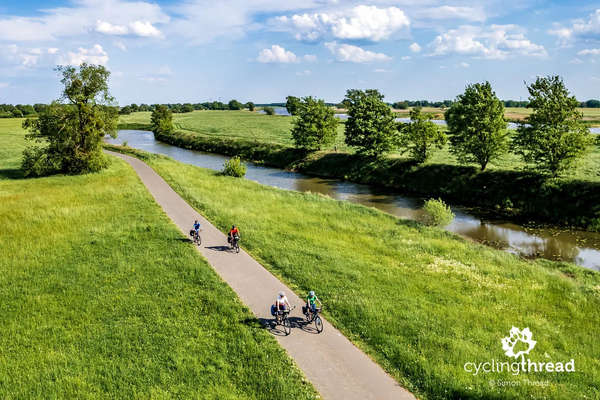
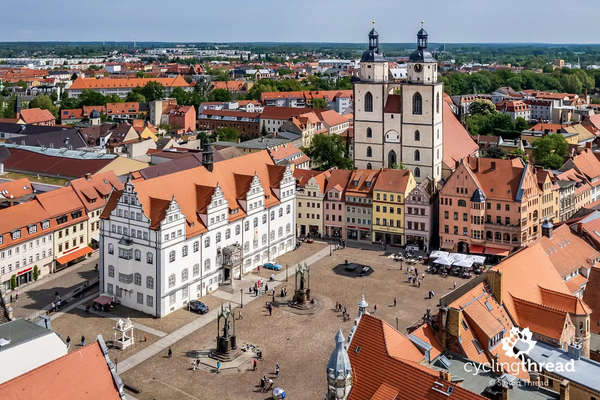
Wittenberg sits about halfway between Dresden and Magdeburg, and it feels like a natural place to stop. It's where Martin Luther began the Reformation by posting his 95 Theses on the church door. Even if you're not into history, the town has a special atmosphere. The route brings you straight to the old town, which is small, walkable and full of charm. We spent the night at the Cranach-Herberge and explored the cobbled streets in the evening, after most visitors had gone. It was peaceful, quiet - and powerful in a quiet way. Wittenberg isn't just pretty - it means something.
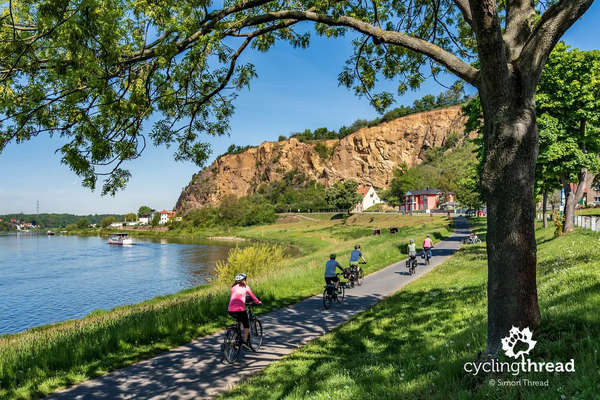
One nice thing about this route is how often it crosses from one side of the Elbe to the other. Sometimes you take a big bridge, sometimes a small local ferry. These crossings give the ride a pleasant break and a chance to enjoy the view. On our ride, we changed sides often - sometimes by choice, sometimes because the route suggested it. The ferries were a highlight. They're simple, quiet and local - and they let you slow down for a moment and chat with other cyclists. Each crossing adds something small, but special, to the journey.
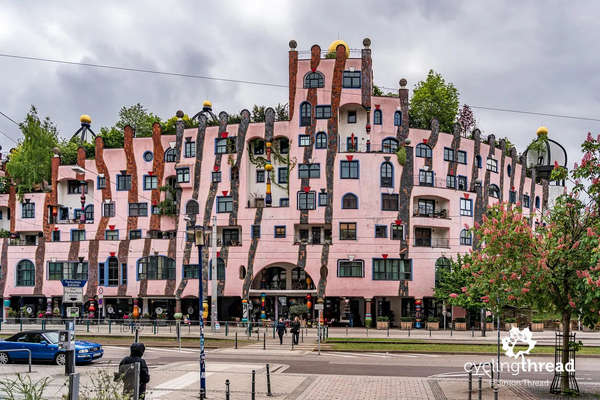
Arriving in Magdeburg feels like reaching a quiet but spacious end to the trip. The route takes you into the city through green parks and along the riverside, so you don't feel the usual rush of traffic. Magdeburg doesn't have the grand look of Dresden, but it has its own kind of character - modern, open and honest. It's a big enough place to find anything you need as a cyclist and still close to the water. After a few days of varied riding, Magdeburg gives you space to reflect - and a satisfying contrast to where the journey began.
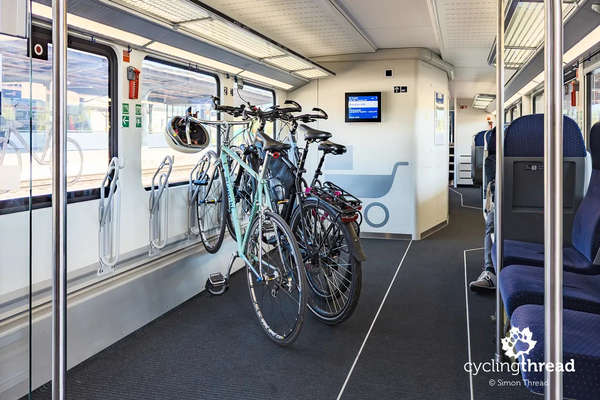
One of the best things about this route is how well it's connected by train. Towns like Dresden, Riesa, Wittenberg, Dessau and Magdeburg all have train stations and many trains take bikes. That means you don't have to cycle the whole route if you don't want to. You can skip a section, go back by train, or take a shortcut if the weather turns bad. It makes the route more flexible - and more relaxing. If you like to travel by train with bicycle, this is one of the easiest parts of Germany to do just that. Even if you don't end up using the trains, it's nice to know they're there if you need them.
Germany's Bett+Bike program is a great example of how to take care of bike travelers. On this section of the Elbe Route, we stayed at two certified Bett+Bike hotels. In Wittenberg, the Cranach-Herberge had a secure bike room and a cozy feel, right next to the old town square. In Magdeburg, Sleep&Go offered a spacious basement for bikes, with racks on the walls and chargers for e-bikes. These places weren't just bike-friendly - they really understood what cyclists need after a long day on the road. And that made a difference.
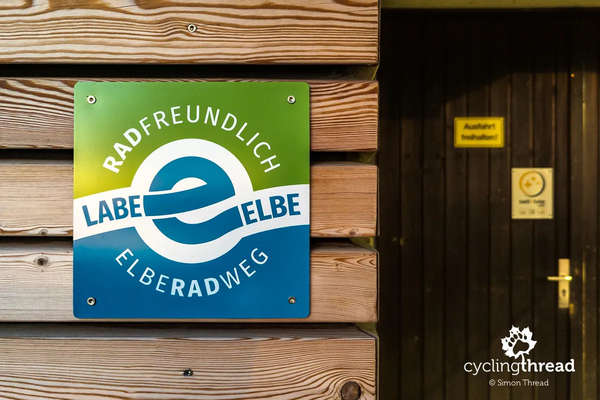
Looking back at our ride from Dresden to Magdeburg, we didn't just remember the towns and the distances - we remembered the feeling. The Elbe Cycle Route doesn't try to impress with big gestures. Instead, it lets you notice small things: a quiet road through the floodplain, the way the light changes over the fields, or the wind in the trees. Those moments stay with you. And even days later, we weren't thinking about the kilometers - we were thinking about the calm, steady rhythm of the river. It's that kind of ride.
Check out our entire report from the Elbe route on our blog at www.cyclingthread.com
Don't miss my other posts on cycle.travel:
- Around Luberon cycle route in Provence
- Ciclovia Alpe-Adria - Austria & Italy
- Loire by bike in France
- Rhine Cycle Route in Switzerland
- Tauber-Altmühl Radweg in Franconia
- Waterline Route in the Netherlands
The Tauber and Altmühl River Cycling Route in Franconia, also known as the Tauber-Altmühl Radweg, is regarded as one of the most captivating cycling routes in Germany. Its glowing reputation stems from the stunning landscapes of two river valleys, including the rocky terrain of the Franconian Jura, which gives the Altmühl River a distinctive charm. Adding to the "romantic" atmosphere of the Tauber-Altmühl route are Franconia's medieval towns, among them the famous Rothenburg ob der Tauber, which consistently ranks first in the poll of Germany's Top 100 Attractions. It was in this delightful setting that we spent a long June weekend.
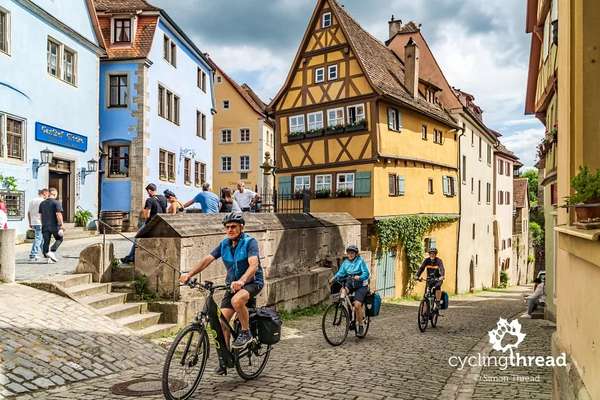
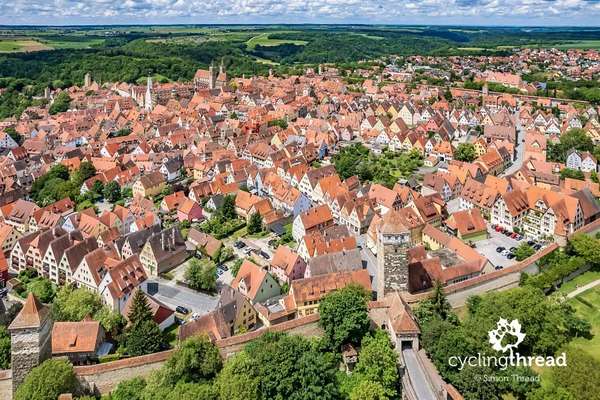
Rothenburg is the perfect starting point for a cycling trip through Franconia. The city is stunning - whether viewed from a drone’s perspective or while strolling through its charming streets. It shines during the day, but its nighttime ambiance is equally captivating. The first impression is also remarkable: arriving from the train station, you reach the well-preserved ring of high defensive walls and enter the city’s golden age through a majestic gate. We recommend organizing your visit to Rothenburg as we did—spend the first night in Nuremberg, take a morning train to Rothenburg, and dedicate the rest of the day to exploring the city on foot. There are a dozen or so key landmarks and places worth seeing, and when combined with the medieval atmosphere of Rothenburg, it truly deserves at least a full day of your time. For the best experience, consider hiring a local guide to bring the city’s rich history to life.
The cycling route along the Tauber and Altmühl rivers follows an unusual pattern. It first runs upstream along the Tauber River and then leads downstream along the Altmühl. The route begins in Wertheim, near the confluence of the Tauber and Main Rivers. From there, it heads toward the magnificent Rothenburg, the highlight and the highest point on the route. After leaving this Franconian gem and crossing the nearby European Watershed, the Altmühl River takes over, guiding cyclists all the way to its confluence with the Danube in the town of Kelheim. Regardless of where you start the journey, the route begins with an uphill ride along one river, followed by a gentle, enjoyable descent along the other after visiting Rothenburg. The two sections differ in proportion—the part along the Tauber River is about 100 kilometers, while the section along the Altmühl spans roughly 250 kilometers.
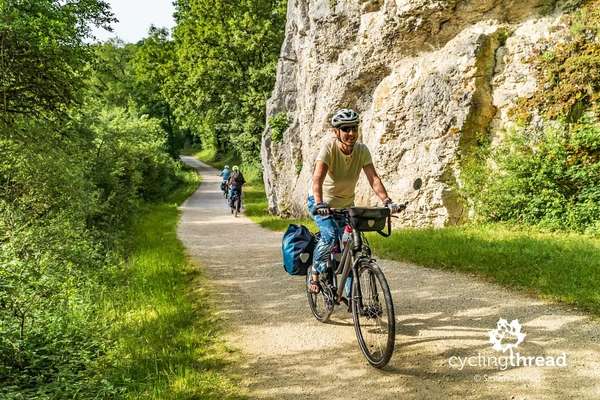
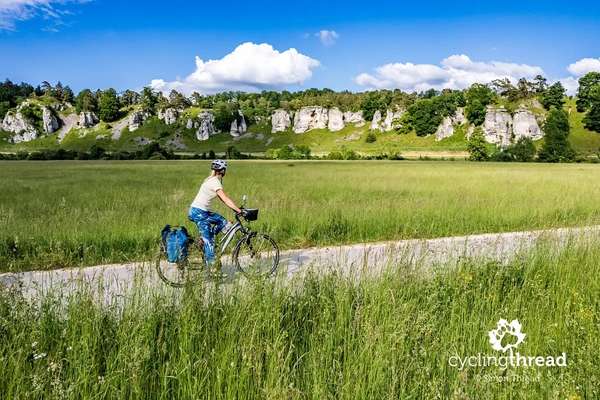
It’s hard not to notice that most cycling paths in the Altmühl Valley Nature Park are not paved roads but gravel paths made of fine, delicate aggregate. This is somewhat contrary to what we see on the best cycling routes in Europe. However, it’s undeniable that the gravel sections blend beautifully with the rocky landscape of the valley. As we learned, this isn’t the final state but rather a result of limited budgets in local municipalities, which cannot afford a large-scale investment in cycling surfaces. Gravel, however, comes with its drawbacks - greater rolling resistance for bike tires, dust in the air, and higher annual maintenance costs to ensure true cycling comfort.
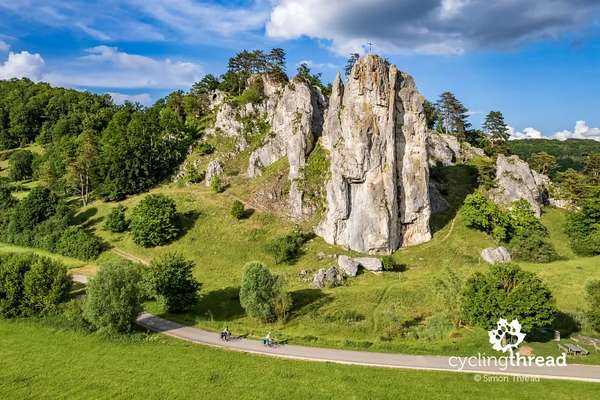
Among the geological attractions of the Altmühl Valley is the Burgstein rock, a massive limestone tower whose fascinating story is told through its numbers. The limestone it is composed of was formed approximately 135 to 154 million years ago, at a time when southern Germany was located at the latitude of today’s Florida, and the Atlantic Ocean was just beginning to form. Even more intriguingly, about 5 million years ago, this rock was shaped by the waters of the Danube, which only changed its course to the modern one during the Ice Age - around 150,000 years ago - leaving its former valley to today’s Altmühl River. Burgstein is now one of Bavaria’s most important geological sites and, of course, a picturesque backdrop for a souvenir photo.
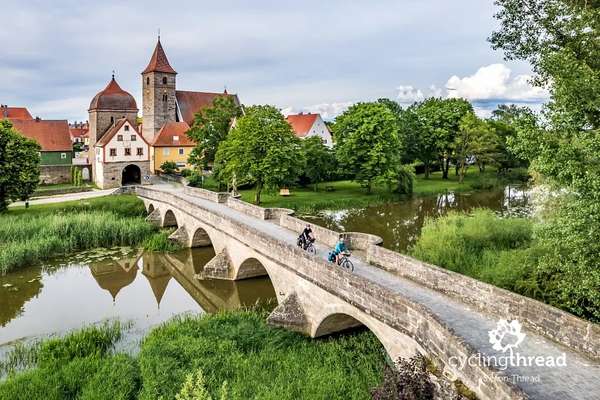
The well-preserved medieval stone bridges are among the yet another places to see along the route. You’ll find them in places like Herrieden and Ornbau, one of Bavaria’s smallest towns. Though Ornbau is much smaller than Herrieden, its 17th-century bridge over the Altmühl River is longer and leaves a far greater impression. Built from thick sandstone blocks, its central span is adorned with an 18th-century statue of Saint John of Nepomuk. It is even referred to as a gem of the Upper Altmühl Valley. The bridge leads to a town with a preserved medieval urban layout, encircled by a ring of 13th-century city walls. Another of the beautiful medieval bridges that have survived over the Altmühl River can be found later in the route near Eichstätt, close to the village of Pfünz. This 15th-century structure, blown up by Austrians in 1800, was rebuilt in 1822 and remains one of Bavaria’s most valuable stone bridges.
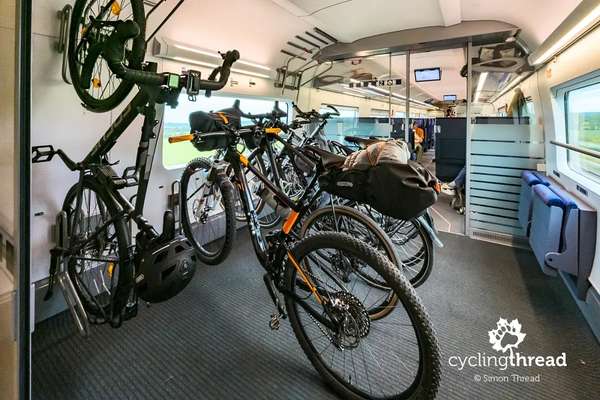
An interesting detail - and a minor attraction in itself - was the way we traveled to Franconia. Given the considerable distance (1,100 kilometers) from Gdańsk to Franconia, as well as our shared desire to rest along the way, we chose to travel with bicycle by train. We first boarded the well-known Berlin-Gdynia Express from Gdańsk to Berlin, and from there, switched to Germany’s high-speed train, the ICE, heading to Nuremberg. Booking a ticket for the "German Pendolino" early guarantees both a reasonable price and a very comfortable journey. This generation of ICE trains offers up to eight bike spaces in a dedicated compartment located in the first car - some with horizontal hooks and others (on the ends) with vertical ones to leave more room for passengers passing through the bike area. It's a completely different experience compared to what our own Pendolino offers. The next day, we reached Rothenburg with a short local connection through Ansbach.
This was our third cycling trip through Franconia, and each time we discovered a slightly different side of this region. The Main River Cycling Route is one of the most beautiful in Germany, passing through popular cities like Bamberg and Würzburg, which a few years ago opened our eyes to cycling tourism in Germany. Our second trip, along the Hohenzollern Route, introduced us to a very local, quiet, and provincial Franconia, one that is almost untouched by tourists. Now, the Tauber-Altmühl Cycling Route felt... somewhere in between. On one hand, it featured Germany's most beautiful and popular city; on the other, it offered an intimate atmosphere in a picturesque, Jurassic landscape. Of these three trips, all were worth the effort and the visit, but today, the Tauber-Altmühl Radweg takes the top spot on our Franconian podium.
Find more German cycle routes on our website.
And check out my other articles on cycle.travel:
- Around Luberon cycle route in Provence
- Elberadweg - Dresden to Magdeburg
- Ciclovia Alpe-Adria - Austria & Italy
- Loire by bike in France
- Rhine Cycle Route in Switzerland
- Waterline Route in the Netherlands
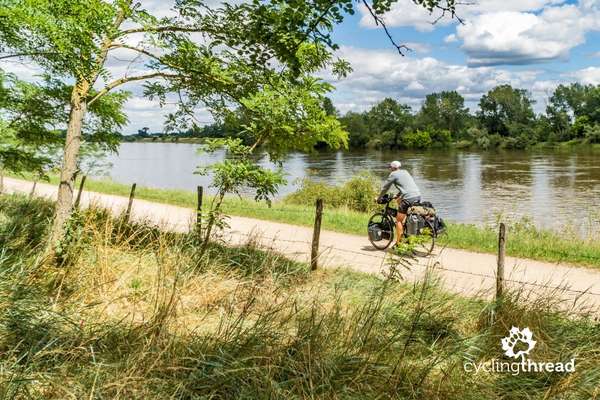
During our cycling the Loire Valley in France, we were looking forward to miles of smooth asphalt bike paths, but instead, we ended up navigating gravel paths alongside the Loire River. We had imagined enchanting vistas, yet we discovered more classic riverside views, unexpectedly enhanced by the presence of stunning castles and palaces. It was the sheer quantity, beauty, and variety of these historic structures that overshadowed our initial perceptions of the area. After all, the essence of the Loire Valley lies in France's rich history, its remarkable culture, art, and architecture, lending the region a touristic allure that places the Loire among the most captivating rivers to explore in Europe.
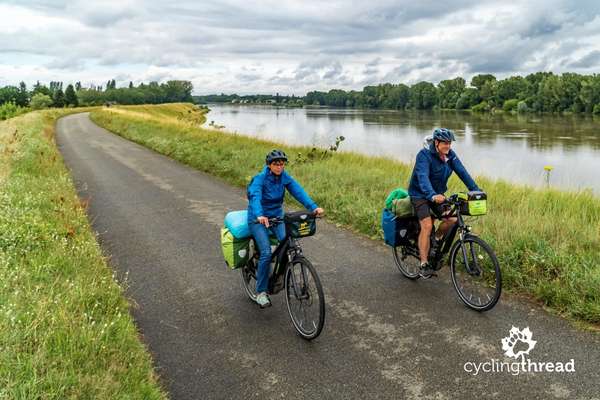
During our visit to France, we embarked on a bike journey through a portion of the Loire's central path, recognized as a UNESCO World Heritage Site in 2000. This esteemed and valuable stretch of the Loire Valley runs from Sully-sur-Loire near Orleans to Chalonnes-sur-Loire near Angers. To navigate this roughly 280-kilometer segment of the river, we traversed about 380 kilometers on the Loire à vélo, or "Loire by bike", trail. Starting from Sully-sur-Loire, our route took us through Orleans, Chambord, Blois, Amboise, Tours, Chinon, Saumur, and finally to Angers. On our journey back, we were aided by a special train for cyclists, a detail I'll delve into more at the article's conclusion.
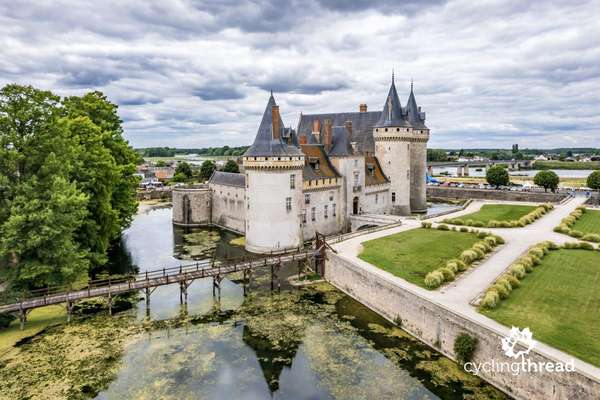
We selected the charming town of Sully-sur-Loire as the ideal launching point for our cycling adventure in the Loire Valley. The town's crown jewel is the modest yet stunning Château de Sully, a prime example of military-residential architecture from the 13th century. This moated castle captivates visitors with its historical depth and aesthetic appeal. Additionally, the town is home to a historic bridge spanning the Loire River, which links the town's two halves and enhances the scenic beauty of the area. Exploring the quaint streets lined with stone buildings and narrow alleys near the castle was an enchanting experience. Our evening walk through the historic heart of Sully-sur-Loire served as a delightful and symbolic beginning to our multi-day journey into the heart of the ancient Loire Valley.
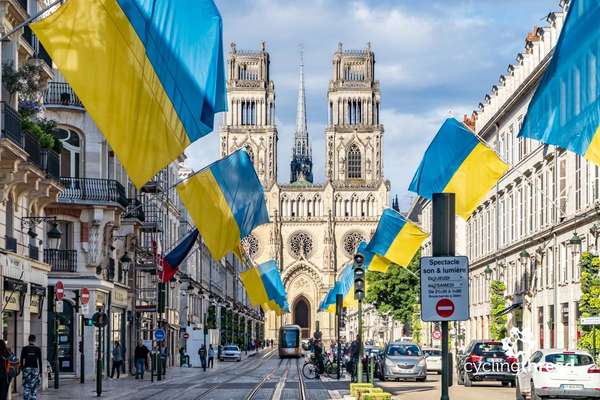
In the heart of Orleans, we were welcomed by the sight of large Ukrainian flags in yellow and blue, waving along Joan of Arc Avenue. It was here that I captured one of my favorite photographs of the journey, just as the sun broke through the clouds after a rainfall, illuminating the grand Sainte-Croix Cathedral of Orleans that marks the eastern end of the city's most renowned street. Standing at 88 meters tall, the cathedral's spires rank it among the top five tallest in France. The cathedral is tied to the tale of a victorious mass in 1429, attended by Joan of Arc following the lifting of the English siege on Orleans. However, the fact that the current structure's erection began in 1601 hints that the famous story actually relates to an earlier Romanesque church that once stood in its stead. The Sainte-Croix Cathedral we see today was only inaugurated in 1829, exactly four centuries after the Siege of Orleans. A notable point is that since World War II, neither of the cathedral's two towers has undergone renovation, rendering them off-limits to the public.
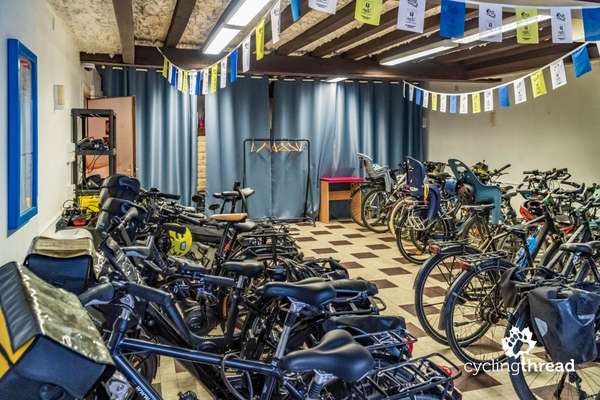
Upon our arrival that day, we settled into the welcoming Chaptal Hotel in Amboise for the night, which swiftly became recognized as one of the most bicycle-friendly accommodations we've encountered on our cycling tours across Europe. This distinction was largely due to its superbly organized bike room—a facility that not only offered secure bicycle storage but also included a workshop for bikes, a charging station for electric bikes, and even a dressing area alongside a rack for drying wet clothing. Furthermore, the bike room could be directly accessed from the street via its own entrance and a purpose-built ramp, enhancing convenience for cyclists. Emblematic of its dedication to cyclists, the hotel is a member of the Accueil Vélo network, a commitment prominently displayed by a plaque situated just below the state-issued hotel star rating sign.
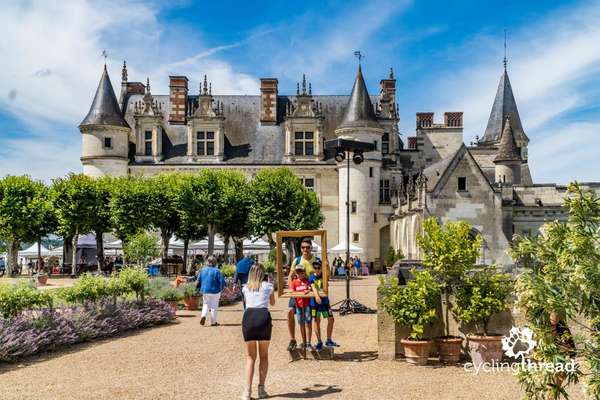
Even if just for the breathtaking views it offers of the city and river, Amboise Castle is a must-see destination. The opportunity to stroll through its meticulously kept, quaint garden adds to its allure. Our recollections of Amboise are further enriched by the quaint market we stumbled upon within the castle's courtyard. This market showcased local purveyors of jams, liqueurs, wines, and confections. Additionally, we had the unique experience of being interviewed by a French television crew, who were there capturing a segment on the revival of tourism following the hiatus caused by the pandemic. Not to forget, our leisurely evening walk the day before, meandering through the town's narrow lanes and along the riverfront promenade as the sun dipped below the horizon, was truly memorable. In essence, Amboise possesses all the qualities to be fondly remembered as one of the most notable towns and villages dotting the Loire Valley.
During a lovely dinner at the Au Local restaurant in Chinon, nestled right beside the castle tower, we were accompanied by one of the Loire's wines. The ambiance was perfect with the setting sun, the day's cycling efforts behind us, and the quiet chatter from neighboring tables on the terrace, occasionally punctuated by contented murmurs prompted by the exquisite flavors. The official route's website highlights local Loire delicacies, including the traditional Nantes almond cake flavored with rum, fouée (a type of pork ball served with a pâté-like filling), Tours' nougat cake, goat cheeses from the Loire Valley, the inverted apple tart known as tarte tatin, and the renowned mustards of Orleans, among others. France truly is a haven for food lovers, a fact that deserves a spot in any travel itinerary to the Loire Valley, where one might consider trading in some cycling miles for culinary delights.

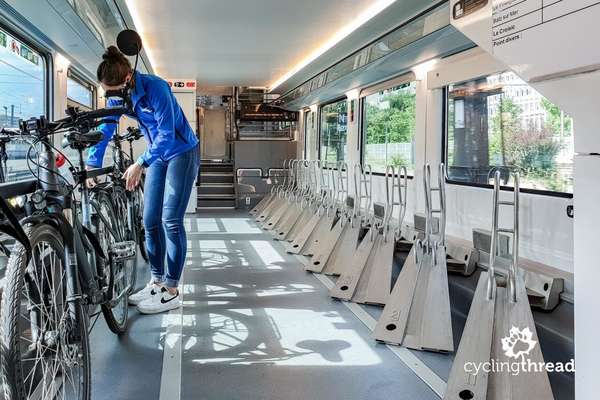
The culmination of our journey's cyclist-friendly experiences occurred as we prepared to return to our car in Orleans by train. A young woman, adorned in the SNCF (French National Railway Company) uniform, emerged from a train we had randomly approached. She kindly asked us to detach our bicycles and panniers, then personally guided our bikes to the dedicated compartment on the lower level of a regional double-decker train. After inquiring about our final stop, she skillfully arranged our bicycles in the special racks, ensuring they were in the correct sequence for our destination. We then proceeded to the upper deck, which was reserved for cyclists, to take our seats. Upon reaching Orleans, we collected our bicycles. It was only when disembarking that I noticed the La Loire à Vélo inscription on the train, prompting me to seek out further details about this thoughtful service later.
Our adventure in the Loire Valley was anything but disappointing. While the landscapes of the Loire might have seemed ordinary at first glance, they were completely outshined by the magnificent interiors of the palaces and castles we explored, as well as the exquisite culinary creations served by the region's restaurateurs. Rather than focusing solely on the quality of the cycling paths, I found myself continually impressed by the comprehensive amenities offered along the Loire à vélo cycle route. This included access to the French network of cyclist-friendly accommodations, clear signage along the route, and the exceptional train service catering specifically to cyclists. Our week-long exploration of the Loire Valley unfolded as a collection of delightful, unexpected discoveries in both travel and cycle-touring, elevating it to one of the top positions on our list of Europe's best cycling routes.
Check out my other articles on cycle.travel:
- Around Luberon cycle route in Provence
- Elberadweg - Dresden to Magdeburg
- Ciclovia Alpe-Adria - Austria & Italy
- Rhine Cycle Route in Switzerland
- Tauber-Altmühl Radweg in Franconia
- Waterline Route in the Netherlands


Made in the Cotswolds. Published by Éditions Système D Ltd.
Log in with your cycle.travel account:
| Password |
Or simply use your account on:
