
Become a supporter
It took us just a week to complete our bicycle trip along the Rhine Route in Switzerland, which stands out as the most breathtaking cycling path we've encountered in Europe to date. The Swiss path's greatest strength lies in its variety. As we followed the Rhine through Switzerland, we were mesmerized by the changing landscapes and picturesque cities, including Chur, Schaffhausen, Stein am Rhein, and Basel, the country's third-largest city. Embarking on a cycling journey along the Rhine is, without a doubt, an excellent idea for a biking vacation in Europe.
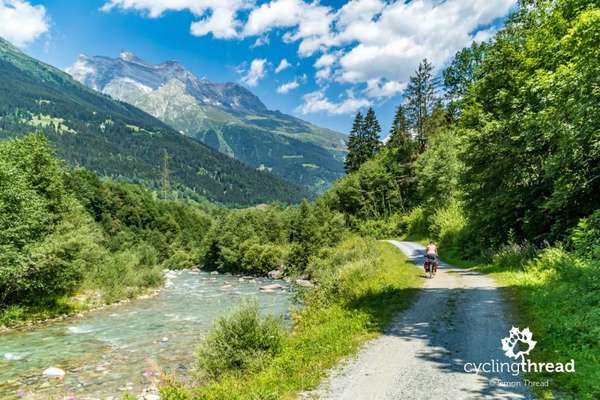
The Rhine Cycle Route in Switzerland marks the beginning of EuroVelo 15, an extensive European cycling trail that stretches for over 1200 kilometers to where the Rhine River flows into the North Sea. This journey starts at Andermatt, a charming resort nestled in the Swiss Alps, and continues towards the Oberalp Pass. From this point, close to the Rhine's source, the route follows the river's upper course, known as the Vorderrhein or Anterior Rhine, leading cyclists through the breathtaking Ruinaulta, often referred to as Switzerland's Grand Canyon. After leaving the city of Chur in the Graubünden region, the pathway enters a tranquil phase, winding through a wide valley until it reaches Lake Constance. The journey resumes along the bustling towns of Lake Constance's southern shore, through the scenic town of Stein am Rhein, and past Europe's largest waterfall, culminating in Basel. Despite the official distance being 430 kilometers, we found ourselves covering just shy of 480 kilometers.
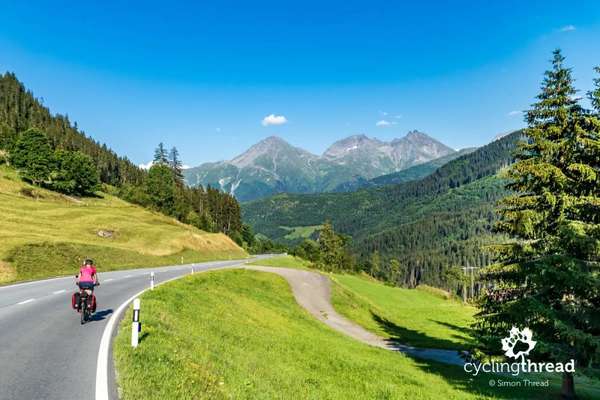
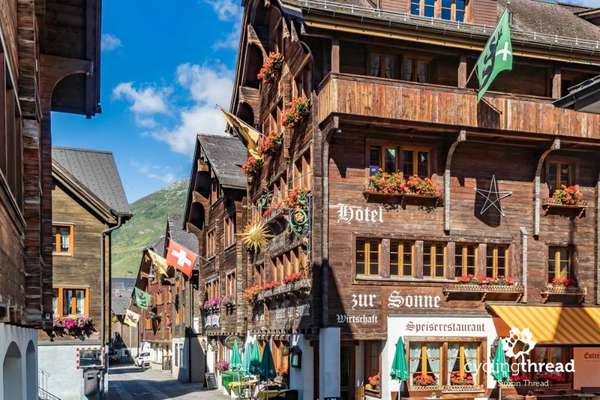
Andermatt greeted us with almost entirely clear, blue skies, while the surrounding Ursern Valley was drenched in sunshine. Historically, Andermatt served as a crucial junction for trade routes across the Alps, and today, it acts as a hub for a variety of tourist activities, including hiking, biking, driving, and even rail travel. The town retains a historical charm, with its main street, now restricted from tourist and through traffic, lined with ancient buildings. Noteworthy among these is the so-called Suworow House, which was once the residence of Russian General Alexander Suvorov during his campaign against France in the Second Coalition war of 1799. This historic building is currently home to the Ursern Valley Museum. A short distance away, one can find the quaint Drei Könige & Post hotel, which has been accommodating merchants crossing the Alps for centuries.
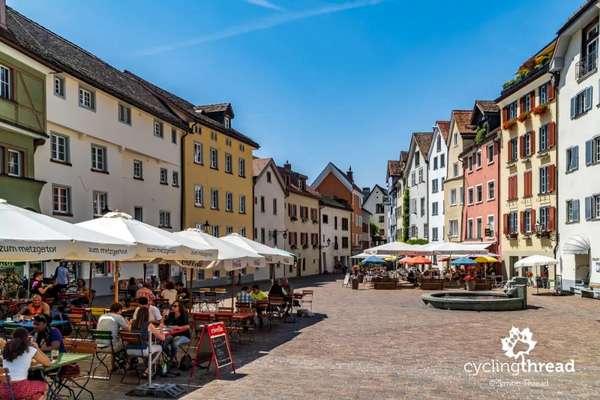
Navigating through a storm and taking time to marvel at the Grand Canyon, we reached Chur late in the evening, sadly missing out on experiencing the nightlife of Switzerland's oldest city. The following morning, we ventured to the serene square behind St. Martin's Church, located in front of the Rhaetian Museum. The museum offers traditional exhibits that tell the history of the Graubünden region, alongside intriguingly set-up displays in the basement of the ancient building, showcasing local archaeological treasures. Standing in the square outside the museum, one gets a sense of timeless tranquility. In one corner, a fountain quietly babbles, providing relief to tourists on warm days, who then continue on to the majestic Cathedral of the Assumption of the Blessed Virgin Mary, dominating the Old Town's skyline.
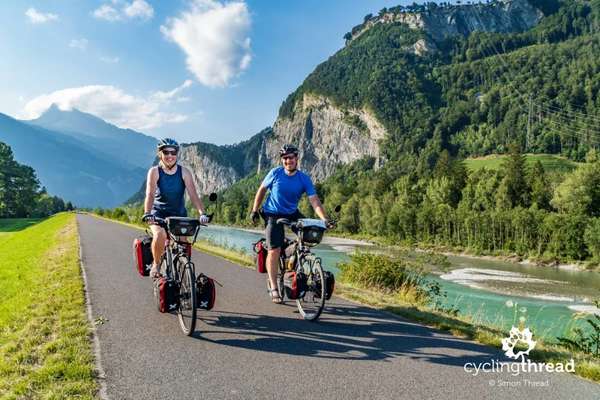
Shortly after rejoining the Rhine, we encountered one of the most breathtaking segments of our journey. Here, the cycling path hugs the river's edge, skirting the base of the Fläscherberg massif, crowned by the Regitzer Spitz peak. Fläscherberg is cherished by locals for outdoor activities and also doubles as a natural defense outpost for the Swiss army. This spot marks the northernmost boundary of the Graubünden canton, beyond which lies the diminutive principality of Liechtenstein. It presents perhaps the finest chance to capture a memorable photo with the Rhine as a backdrop.
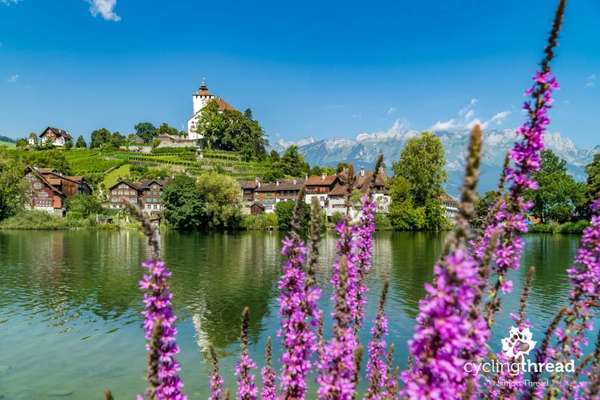
On the subsequent day, we arrived at a welcoming campsite in Buchs, a town we had previously passed through during our Alpine adventure. Much like our last visit, Buchs itself didn't leave a strong impression. Our journey had taken us through Chur, allowed us a lengthier stop in Bad Ragaz, a detour down to Sargans, and a quest to locate the Gonzen mine, leading us to the campsite just as the day was fading. The decision to explore the neighboring town of Werdenberg was thus deferred to the next day. With its castle bathed in the glow of spotlights, Werdenberg promised an ample share of picturesque views for our exploration.
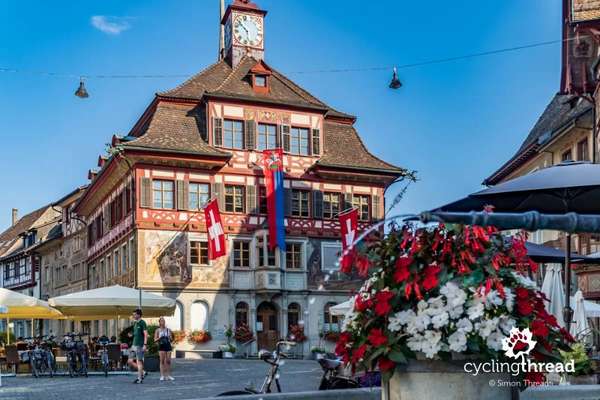
Upon departing Lake Constance, the Rhine progresses towards the North Sea, embracing the quintessential characteristics of a riverside landscape. It is within this setting that Stein am Rhein emerges as arguably the most enchanting town along the route. This town is home to numerous historical edifices recognized as part of Switzerland's national heritage, with a significant concentration around the uneven, inclined market square, dominated by the imposing structure of the town hall at its summit. The unique ambiance that must pervade this picturesque location during the height of the tourist season is something we could only envision.
Schweiz Mobil stands out as an excellent resource for exploring Swiss bike paths, offering a comprehensive website and mobile application that details tourist trails across Switzerland. This includes options for both touring and mountain biking, as well as hiking, rollerblading, and kayaking. In planning our journey, I found great pleasure in navigating through the assortment of cycling paths on the map of Switzerland's bike trails. We have plans to tackle the Lakes Route and the Jura Route in future years. It's worth noting that the site's sidebar menu allows users to filter the map display by types of routes - national routes are denoted by a single digit, regional by two digits, and local by three. Additionally, the site provides recommendations for daily stage lengths and brief overviews of the attractions one can expect to encounter.
Discover more Swiss cycle routes on our website.
And check out my other articles on cycle.travel:
- Around Luberon cycle route in Provence
- Elberadweg - Dresden to Magdeburg
- Ciclovia Alpe-Adria - Austria & Italy
- Loire by bike in France
- Tauber-Altmühl Radweg in Franconia
- Waterline Route in the Netherlands
The Alpe-Adria bike route is one of Europe's most beautiful and popular cycling paths. In Austria, it's known as the Alpe-Adria Radweg, and in Italy, it's called the Ciclovia Alpe-Adria. The route is famous for crossing the Alps, going from Austria's northern Alps to the Adriatic Sea in Italy. What makes the Alpe-Adria stand out among European bike trails is a special 60-kilometer section that was once a railway in the Alps but is now a bike path. This part has many kilometers of paths that follow the old railway, including tunnels now used only by bikes, as well as beautiful old bridges and train stations that have been brought back to life thanks to bike riders.
The Alpe-Adria bike route's appeal comes from its safe and comfortable riding conditions, with many parts far from car traffic. One section, considered among Europe's best bike paths, follows an old railway from Tarvisio to Udine. The route's varied landscapes add to its charm, starting from the East Alpine scenery, moving through picturesque Carinthia, and ending in the warm Mediterranean climate of the Adriatic. The journey's difficulty changes daily - it begins with two days of easy climbing, followed by a smooth descent into the Villach basin, then another climb, and ends with two days on a gently sloping path to the finish. Along the way, riders can enjoy diverse sights, taste the distinct cuisines of Austria and Italy, and benefit from a bike-friendly tourism setup, including places to stay. All these factors make it an ideal setting for a cycling vacation.
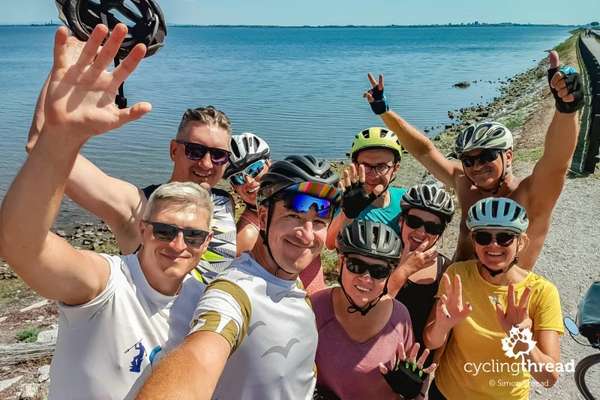
The beginning of the Alpe-Adria bike route is easier to ride than expected, thanks to its path along the Salzach and Gasteiner Ache valleys, which gently slope up towards the High Tauern mountains. In the first two days, cyclists cover around 120 kilometers with just two main climbs - one shortly after passing Schwarzach im Pongau and the other approaching and within Bad Gastein. The first climb has steep parts between 10-15%, and near the Church of Saints Primus and Felician in Bad Gastein, the slope exceeds 16%. However, these climbs are relatively short, about 2-3 kilometers, meaning that cyclists who aren't as experienced can easily walk these sections without losing much time.
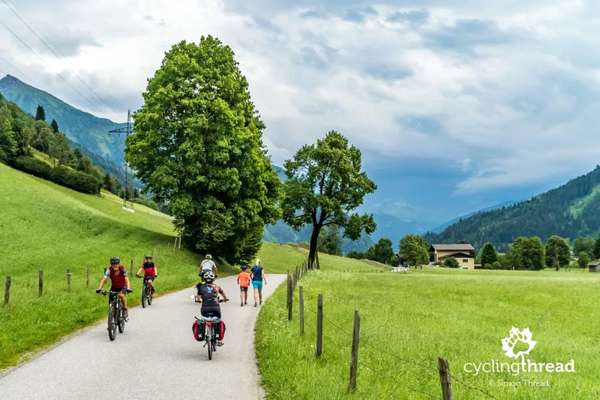
We got off the train that passed through a tunnel under the High Tauern mountains and found ourselves in Carinthia for the third year in a row. This beautiful part of Austria is a hub for cycling tourism, attracting riders from all over Europe. Our first trip here was the Great Carinthia Lake Loop, a journey connecting the biggest lakes in Carinthia, starting from Villach. The following year, we took on the Drava bicycle route, celebrated as one of Europe's top cycling paths, with its central and longest stretch cutting through Carinthia. This year, on the Alpe-Adria route, we explored new areas of bike-friendly Carinthia. We started with a ride along the Möll River valley, which flows from the well-known Grossglockner mountain group, and then covered several kilometers in the southern part of Carinthia, facing the initial ascents towards the Julian Alps.
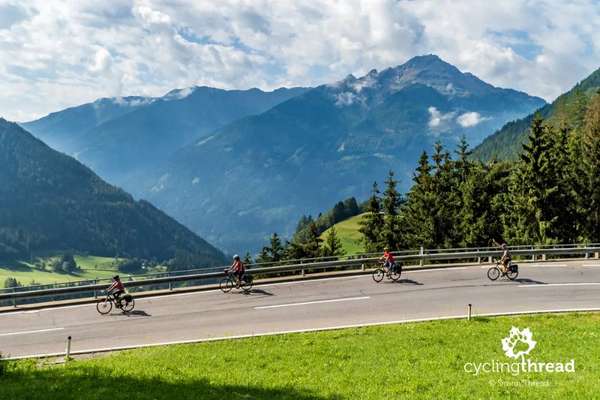
Before reaching Tarvisio, we joined a bike path that follows the route of the old Pontebbana Railway, named after the town of Pontebba, near the former Austro-Italian border. The railway was last used at the end of the 20th century, and between 1985 and 2000, a new, modern, double-track railway was constructed with parallel tunnels through the Alps. After the old railway was abandoned, the tracks were transformed into a bike path by removing the old ties and laying down smooth asphalt. This has attracted cyclists who appreciate the mild incline of no more than 2.2%, offering an easy ride away from road traffic, amidst stunning river and Alpine landscapes. This scenic path stretches for about 60 kilometers between Tarvisio and Gemona del Friuli.
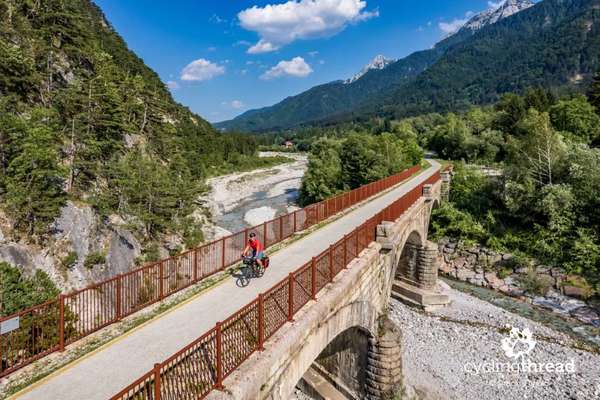
As you leave the charming town of Gemona del Friuli on the Alpe-Adria route, the Alpine scenery comes to an abrupt end, as if sliced away. The landscape flattens, offering a peaceful ambiance. After a few kilometers of gentle slopes, you'll find you need to put in more effort as you head towards the Adriatic Sea. The route passes through fields, meadows, and protected green areas. Noteworthy sights before reaching Udine include the stunning church in Vendoglio, within the larger area of Treppo Grande; the delightful town of Cassacco with its 13th-century palace, which is private and closed to the public; and the increasingly warm breezes that hint at the nearby Adriatic. The paths vary along this section, ranging from asphalt bike paths and local gravel roads to almost field paths and brief stretches on quiet public roads.
The Alpe-Adria bike route exemplifies the best of cycling tourism by transforming old, unused infrastructure into a vibrant cycling path, alongside providing a network of bike-friendly accommodations, eateries, and even special transport services for cyclists. Set against the backdrop of Europe's stunning landscapes, this route not only offers breathtaking views but also introduces riders to a rich mix of cultural, historical, and natural sights. These elements come together perfectly, creating picturesque cycling scenes like those at the old station in Chiusaforte. While it might be a stretch, the Alpe-Adria can be compared to the Velo Dunajec in Poland, which also leads the way in its region. Velo Dunajec too traverses diverse landscapes, follows river paths, boasts cycling bridges, and is developing its network of Bike-Friendly Places. Hopefully, it will be completed in its entirety and achieve the same level of popularity and emotional appeal as the Alpe-Adria.
Check out our entire report from the Alpe Adria bicycle route in Austria and Italy.
And check out my other articles on cycle.travel:
- Around Luberon cycle route in Provence
- Elberadweg - Dresden to Magdeburg
- Rhine Cycle Route in Switzerland
- Loire by bike in France
- Tauber-Altmühl Radweg in Franconia
- Waterline Route in the Netherlands


Made in the Cotswolds. Published by Éditions Système D Ltd.
Log in with your cycle.travel account:
| Password |
Or simply use your account on:
